
Vision and Hearing Impairment
Children who are blind or have low vision, or who are deaf or hard of hearing, often learn everyday skills in different ways. Occupational therapy supports them to develop independence in self-care, play and learning, using approaches and adaptations that suit how they take in information.
Many of the children we see have a sensory impairment alongside other diagnoses, such as cerebral palsy or autism. We work with the whole picture, and alongside the teachers, audiologists, orthoptists, orientation and mobility specialists and other professionals already supporting your child.
How occupational therapy can help
- Fine motor and hand skills, including tactile exploration for children with low vision
- Daily living skills — dressing, eating, grooming and toileting — taught with adapted techniques
- Play skills and exploring the environment with confidence
- Seating, positioning and equipment for children with complex physical needs
- Adaptations at home and school so your child can take part more independently
- NDIS assessments and reports
How we work
We adapt how we communicate and how we teach to suit your child, and we work in the places your child spends their day — home, preschool or school, or via telehealth where that suits. We keep you involved throughout and give you practical strategies to use between sessions.
Our experience
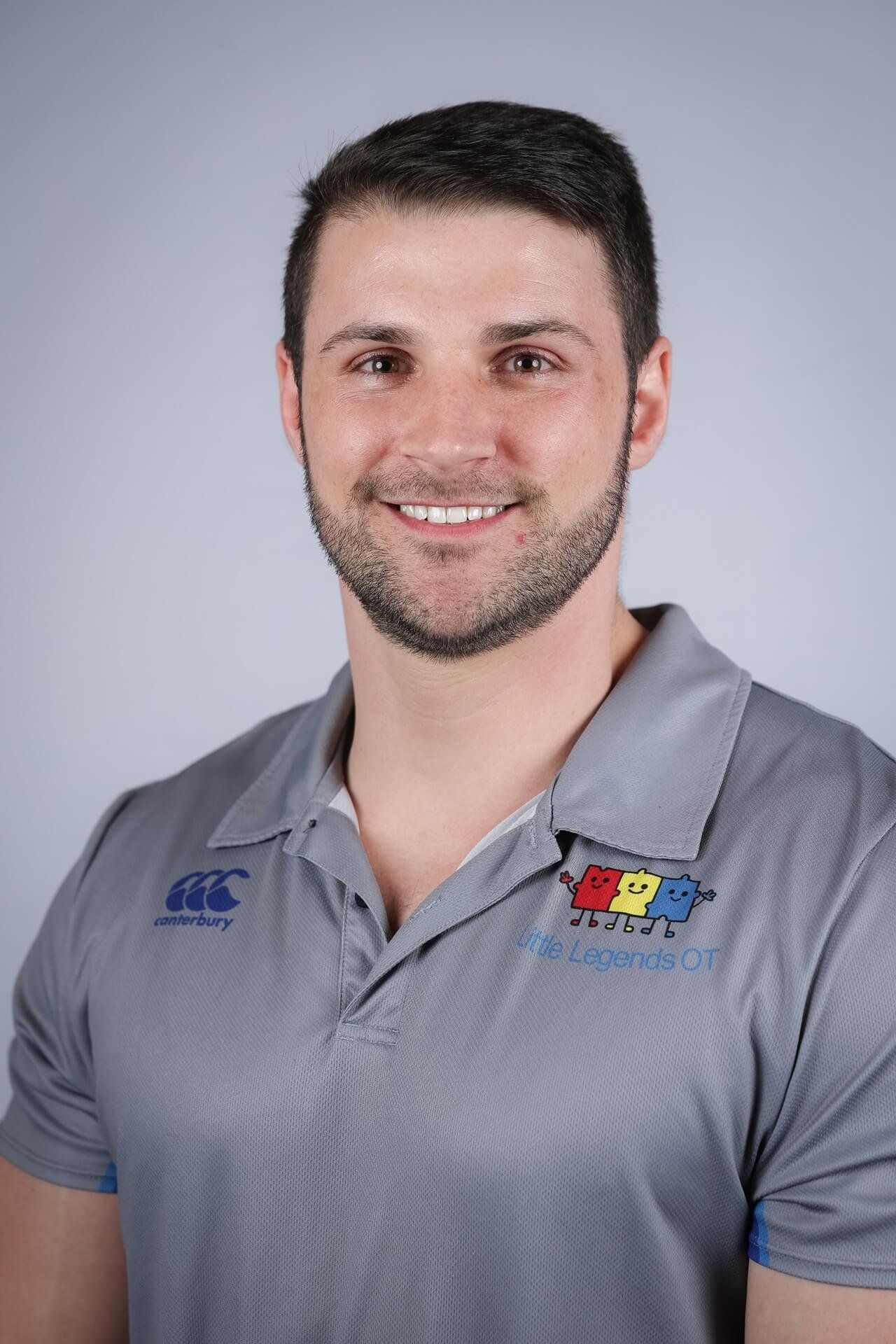
Before founding Little Legends, Luke worked at the Royal Institute for Deaf and Blind Children, primarily with children who have a sensory impairment coupled with a range of complex diagnoses. He has experience working and communicating with individuals who use Auslan, as well as those who use communication devices such as Proloquo2Go, Liberator and Grid 3.
Services that can help
Therapy is always tailored to your child, but these are the services families most often use.
-
ADL Specific Training
Independence in the routines of daily life — dressing, toileting, washing, grooming, mealtimes and preparing food.
Learn more -
Fine Motor Skills Development
Building the small, precise hand movements children need for dressing, eating, cutting, drawing and classroom tasks.
Learn more -
Assistive Technology Consultation
Finding, trialling and prescribing the right equipment — from wheelchairs and seating to sleep systems, bathroom equipment and ramps.
Learn more -
Assessment
A clear picture of your child’s strengths and the areas where they need support, as the starting point for therapy or for NDIS planning.
Learn more
Vision and hearing impairment: your questions
Can you communicate with my child in Auslan?
Luke has experience working and communicating with children who use Auslan. Let us know how your child communicates when you enquire, and we will talk through how we can best support them.
Do you work with children who have complex needs as well as a sensory impairment?
Yes. Much of Luke’s experience is with children who have a sensory impairment alongside other diagnoses such as cerebral palsy or autism.
Can the NDIS fund occupational therapy for my child?
Yes, where occupational therapy supports the goals in your child’s NDIS plan. We currently work with self-managed and plan-managed participants.
Ready to get started?
Tell us a little about your child and what you’d like help with, and we’ll be in touch to talk through the next steps.